Choosing between seasonal and evergreen revenue isn’t a tactical decision—it’s a structural commitment that rewires your relationship with time, risk, and psychological stamina. Yet founders often default into one pattern based on their first product without interrogating whether its rhythm matches their own. Data from IBISWorld’s seasonal risk assessment reveals that seasonal ventures face a 28% higher bankruptcy rate in years 1-3, while evergreen models show a 45% lower probability of ever reaching $1M in annual revenue. The trade-off is brutally asymmetric.
Consider the founder who built a premium fireworks distribution business. They generated $1.2M in revenue each July, then spent eleven months maintaining relationships with Chinese manufacturers and navigating import regulations. The cash flow chasm was so severe they nearly folded three times. Meanwhile, a peer selling digital firework design tutorials on Gumroad earned $180K annually—modest but consistent enough to buy a house. The fireworks mogul made more money but lived with existential dread. The tutorial seller made less but slept soundly.
Modern entrepreneurs increasingly attempt fusion models: the Halloween costume shop that blogs about costume design year-round, the tax preparer who sells evergreen financial courses. These hybrids can work, but they double operational complexity. Before merging rhythms, you must understand the pure forms—their DNA, their cash metabolisms, their psychological warfare. Only then can you architect a business that serves your life instead of consuming it.
- The Seasonal Surge: Riding the Wave of Temporal Scarcity
- The Seasonal Superpower: Strategic Concentration
- The Seasonal Sting: Cash Flow Chasms and Identity Whiplash
- The Seasonal Death Spiral: Silent Killers of the Off-Season
- The Evergreen Engine: Building a Perpetual Revenue Machine
- The Evergreen Moat: Compounding Advantages
- The Evergreen Quicksand: Monotony, Saturation, and Infinite Content
- The Evergreen Slow Death: Silent Strangulation
- The Hybrid Horizon: Engineering Counter-Cyclical Stability
- The Founder Clock: Synchronizing Your Metabolism with Your Model
- The Founder Synchronization Test
- The Time Horizon: How Each Model Ages and Dies
- Time Is Your Silent Co-Founder
- Strategic Synthesis: The Architecture of Choice
The Seasonal Surge: Riding the Wave of Temporal Scarcity
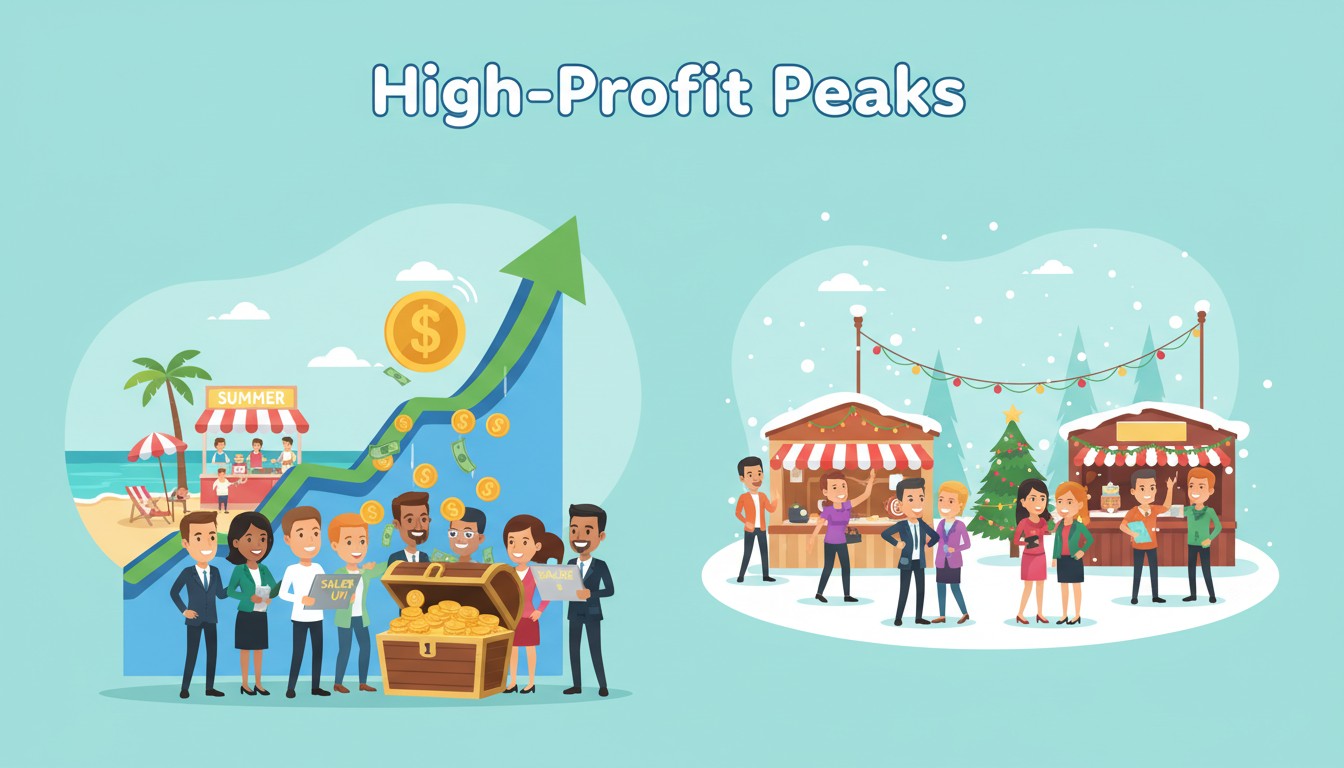
Seasonal businesses are the storm chasers of commerce—they profit from concentrated, predictable demand explosions. The accountant who harvests tax returns April 15th. The pool supplier who lives for Memorial Day weekend. The stationery brand that ships 60% of its annual volume in August. These ventures don’t experience seasonality; they’re genetically coded to it. Their entire organism adapts to a feast-or-famine metabolism.
The operational tempo is intense. You spend months planting marketing seeds—SEO content, influencer relationships, inventory financing—then trigger a frantic harvest window. During peak, you exist in a blur of 18-hour days, temporary staff, and logistics triage. The rest of the year feels like postpartum depression: the high is gone, the bills remain, and you’re not sure what to do with your hands. As one founder of a holiday gift basket company shared with NRF’s seasonal retail panel, “I make eleven months of rent in thirty days. The other ten months, I make anxiety.”
Yet this concentration creates pricing power that evergreen businesses can only dream of. When everyone needs graduation gifts in May, no one price-shops. When a blizzard hits and you have the only snow shovels in stock, you set the price. The tax filing software that costs $200 in April is worthless in June. This temporary monopoly on urgency lets you capture consumer surplus that dissipates in evergreen markets where comparison shopping is eternal.
The Seasonal Superpower: Strategic Concentration
💰 Price Inelasticity
May flowers cost 3x April flowers. When time is scarce, price sensitivity vanishes.
🎯 Marketing Sharpness
“Buy before Christmas or wait a year” is a deadline evergreen brands can only fake.
📦 Inventory Velocity
Products don’t sit. You order for a window, sell through, clear out. Cash stays liquid.
🌍 Hemisphere Arbitrage
Sell winter gear to Australia in June, North America in December. Perpetual season.
🛠️ Off-Season Innovation
Quiet months are for product R&D without daily operational pressure.
🎪 Event Leverage
Black Friday, Valentine’s Day, Tax Day—culture does your marketing for you.
The Seasonal Sting: Cash Flow Chasms and Identity Whiplash
For every advantage, seasonal models exact a brutal tax. The cash flow chasm is existential: you generate 80% of revenue in Q4, but rent is due January 1st. Inventory purchased in August doesn’t convert to cash until December, creating a four-month negative cash float that asphyxiates ventures without deep capital reserves. The SBA’s cash flow management guide warns that seasonal businesses require 40% more working capital than steady-state operations just to survive the trough.
Then comes the psychological whiplash. You spend nine months in scarcity mindset, questioning your competence, depleting personal savings. When peak season arrives, you’re too emotionally exhausted to execute with excellence. Or worse: the season fails. A warm winter decimates ski sales. A pandemic cancels all Halloween parties. Tariffs delay inventory until after the peak window. The concentration that creates profit also concentrates catastrophe. When all revenue eggs sit in one temporal basket, one shock cracks them all.
The human capital problem is equally vicious. You can’t recruit elite talent with “I need you intensely for 3 months, then you’re unemployed.” So you hire temps who require training, commit errors, and erode brand equity. Or you retain a skeleton crew year-round who are underutilized and overpaid during off-seasons. The founder becomes a juggler of human resources as much as inventory.
The Seasonal Death Spiral: Silent Killers of the Off-Season
📉 SEO Amnesia: Your website sits dormant for 9 months. Search engines forget you exist. Come season, you’re invisible.
💸 Fixed Cost Bleeding: Warehouse, insurance, software licenses don’t hibernate. You hemorrhage cash on infrastructure you barely use.
🧠 Skill Atrophy: Your team forgets how to execute. Each year is a retraining bootcamp. Errors repeat, quality erodes.
🎯 Customer Forgetting: Buyers who loved you last year don’t remember your name. Re-acquisition costs remain permanently high.
🌱 No Compound Advantage: This year’s peak doesn’t make next year’s easier. You sprint the same distance annually.
📦 Inventory Roulette: Order too much, you’re buried in dead stock. Order too little, you miss the year’s entire profit window.
The Evergreen Engine: Building a Perpetual Revenue Machine
Evergreen businesses are the perpetual motion engines of commerce—they generate income every day, compound their advantages, and expand with the inevitability of a glacier. The SaaS subscription billing $79/month. The affiliate site earning commissions while you sleep. The online course selling on autopilot. The consulting retainer that pays your mortgage. These ventures don’t peak; they plateau, then ascend, then plateau again. The rhythm is monotonous, but the trajectory is upward.
The psychological relief is immediate. Cash flow becomes forecastable. You can budget with confidence, hire permanent staff, qualify for mortgages. The business transforms from a high-stakes gamble into a reliable partner. Baremetrics’ SaaS analysis demonstrates that evergreen businesses with 5% monthly growth reach $1M ARR faster than seasonal businesses with 300% quarterly spikes because compound interest defeats concentrated bursts.
But the evergreen trap is insidious: boredom. Growth is so incremental it feels glacial. You check daily metrics and celebrate a 2% uptick. There’s no launch adrenaline, no Black Friday frenzy—just the Sisyphean grind of consistent execution. This monotony drives founders to chase shiny objects, pivot prematurely, or burn out from the quiet desperation of perpetual content creation. The tax preparer is insane for three months but free for nine. The evergreen blogger is a prisoner to their editorial calendar forever.
The Evergreen Moat: Compounding Advantages
📈 Compound Interest
Each customer adds to last month’s base. 5% monthly growth = 80% annually. You never restart.
💰 Predictable Runway
You can forecast revenue, hire permanent staff, get approved for loans. Stability creates leverage.
🎯 SEO Dominance
24 months of consistent publishing makes you un-displaceable. Google rewards longevity with authority.
🌍 Global Rhythm
Evergreen products ignore geography. Sell sleep optimization to Australians in June and Americans in January.
🔄 Subscription Lock-In
Monthly billing creates inertia. Customers stay because switching is effort, not because you’re the best solution.
🏖️ Lifestyle Design
You can automate, delegate, and step away. The business becomes a true income asset, not a job.
The Evergreen Quicksand: Monotony, Saturation, and Infinite Content
The dark underbelly of evergreen is the infinite content imperative. A blog demands new posts weekly. A SaaS requires feature updates monthly. A community needs daily moderation. The engine never idles. Founder burnout doesn’t come from intensity—it comes from the impossibility of completion. You can’t “finish” an evergreen business. There’s perpetually another article to write, another bug to patch, another customer to onboard.
Market saturation is the second assassin. When you sell year-round, so does every competitor. The SEO keyword you dominated gets crowded by imitators. The affiliate product you promoted becomes commoditized. Your unique angle gets replicated by ten copycats. Without seasonality’s protective moat, you’re in a daily knife fight for fleeting attention. Ahrefs’ keyword data confirms that evergreen search terms have 4x more competing pages than seasonal ones, making page-one rankings a constant battle.
The final sting: slow growth feels like failure. When your seasonal competitor posts “We did $300K in December!” you’re staring at $9K MRR that took eighteen months to build. The psychological comparison is brutal. You question your model, your competence, your sanity. Meanwhile, your competitor is laying off seasonal staff and praying for snow, but that part stays hidden.
The Evergreen Slow Death: Silent Strangulation
🎢 No Adrenaline High: Without launch windows, motivation becomes pure discipline. Many founders lack the psychological fortitude for perpetual execution without external urgency.
📊 Micro-Optimization Obsession: With constant data, you tweak minutiae. A 0.3% conversion rate change consumes a week. Seasonal founders don’t have time for such diminishing returns.
💼 Headcount Bloat: Without a forced off-season, you keep hiring until margins vanish. Evergreen businesses accumulate people like debris.
🧩 Feature Cancer: There’s no natural stopping point, so you keep adding features. The product metastasizes into bloat, confusion, and technical debt.
🎯 The “Good Enough” Trap: Seasonal businesses must achieve excellence for 3 months. Evergreen businesses can survive mediocrity year-round, preventing the breakthrough that only excellence delivers.
🌱 Opportunity Blindness: While you grind out 5% monthly growth, a seasonal competitor builds a brand that commands 10x pricing power during their 90-day window.
The Hybrid Horizon: Engineering Counter-Cyclical Stability
Astute founders transcend the binary. They design hybrid models that harvest seasonal premiums while anchoring to evergreen foundations. The tax accountant who maintains year-round bookkeeping clients. The ski resort that converts lifts into mountain biking infrastructure for summer. The holiday decor brand that pivots to wedding decorations in June. The secret is repurposing—same customer, same skills, same assets, but rotating the seasonal trigger.
The most elegant hybrid is the “counter-cyclical” model. The National Park Service model illustrates this perfectly: winter sports concessions generate summer funds, then summer hiking tours fund winter operations. The same lodge, trails, and staff serve opposite seasons. Fixed costs are amortized across the entire calendar, while variable revenue rotates with Earth’s tilt.
Another powerful fusion: the “evergreen foundation with seasonal spike.” A content creator runs a year-round blog (evergreen) but launches a flagship course every September (seasonal). The blog provides stable income and audience growth; the course creates a revenue surge and brand event. The two feed each other: blog readers become course buyers; course buyers become blog evangelists. The foundation smooths cash flow; the spike creates urgency.
The Founder Clock: Synchronizing Your Metabolism with Your Model
Your business model choice is a mirror of your psychology. Seasonal founders are sprinters—they thrive on deadlines, intensity, and defined finish lines. They’re comfortable with boom-bust cycles and use off-seasons for creative renewal. Evergreen founders are marathoners—they build systems, measure daily progress, and find satisfaction in compound accumulation. Neither archetype is superior; they’re different metabolic rates for processing risk and reward.
The decision crystallizes around three axis points: capital reserves, risk tolerance, and chronological temperament. Seasonal ventures require 6-12 months of personal runway because revenue won’t materialize until your window opens. Evergreen ventures demand 18-24 months of patience because meaningful growth is glacial. Choose the wrong temporal match, and you’ll exit before either model can prove itself.
The Founder Synchronization Test
Seasonal Sprinter Profile
✓ You love launch energy and defined deadlines
✓ You can survive 6-12 months without revenue
✓ You enjoy creating, then resting and reflecting
✓ You’re comfortable with all-or-nothing risk
Evergreen Marathoner Profile
✓ You love systems and daily habits
✓ You need steady income from month one
✓ You’re patient for compound results
✓ You prefer predictable, manageable risk
Most founders are hybrids: they run an evergreen base with seasonal spikes. The base provides stability; the spike provides excitement.
The Time Horizon: How Each Model Ages and Dies
Time treats these models differently. Seasonal businesses remain forever young—each year is a fresh launch, a new campaign, a chance to reinvent. But they age rapidly because one bad season can mean extinction. Evergreen businesses are old from birth—slow, steady, accumulating institutional knowledge. But they can become dinosaurs if the market shifts and they’re too entrenched to pivot.
Founder age matters. A 25-year-old with no dependents can sprint through seasonal cycles, rebuilding after failures. A 45-year-old with a mortgage needs evergreen stability. The 25-year-old can afford to lose a season. The 45-year-old can’t afford to start from zero every year. Neither is wrong—they’re just on different clocks.
Business age also matters. Seasonal ventures prove themselves quickly—you know by year two if the window is profitable. Evergreen ventures take 3-5 years to hit stride. The first two years feel like failure because growth is invisible. But by year five, the evergreen business has a moat. The seasonal business is still only as good as its last 90-day sprint.
Time Is Your Silent Co-Founder
The choice between seasonal and evergreen isn’t about money—it’s about your contract with time. Seasonal businesses ask you to compress your life into intense bursts, then grant you freedom. Evergreen businesses ask you to show up every day, trusting that small steps become miles.
The ski instructor who works 80-hour weeks in winter then surfs Costa Rica in summer is living their dream. The SaaS founder who tracks daily active users and reinvests every dollar is living theirs. The tragedy is choosing the wrong rhythm for your soul and grinding against your own nature until you break.
Your business model must fit your life, not consume it. Ask: Do you sprint and rest, or jog forever? Can you survive 12 months without revenue, or do you need cash from day one? Are you building a legacy or a lifestyle? Be honest. Then build the model that makes time your ally, not your executioner.
Strategic Synthesis: The Architecture of Choice
🎯 The Core Trade-off: Seasonal businesses harvest concentrated demand premiums; evergreen businesses cultivate compound growth. Choose based on your capital timeline and psychological stamina.
💰 Capital Reality: Seasonal ventures need 6-12 months of personal runway. Evergreen ventures need 18-24 months of patience. Mismatching capital to model creates premature failure.
🎭 Founder Fit: Sprinters thrive on seasonal intensity; marathoners succeed with evergreen discipline. Most founders are hybrids who need both stability and excitement.
📊 Validation Imperative: Test your model with a mini-season or a 90-day evergreen sprint before committing. The market’s response is the only truth that matters.